







When I entered the reception area for the Breast Health clinic at a local hospital, it seemed incongruous, but there was a white-haired grandma sitting across the room, reeling off silly stories and self-deprecating jokes like a stand-up pro in Las Vegas. She had everyone within earshot not just in continuous chuckle-mode, but frequently bursting into outright peals of laughter.
Now, let’s face it – none of us was thrilled to be sitting there – we were about to get our mammograms or ultrasounds, and some of us were probably going to get unsettling news before we left the clinic that day. But the communal good cheer in the waiting room at that moment was genuine, and I thought: Norman Cousins would have been pleased.
Working in the latter half of the 20th century, Cousins was a political journalist, author, and longtime editor of the Saturday Review, an influential weekly magazine that covered social and cultural topics.
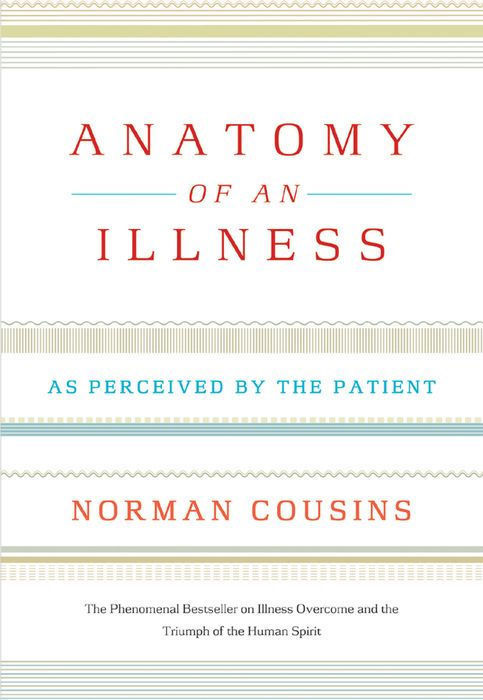
Although he died more than 35 years ago at the age of 75, Cousins’ bestselling memoir, “Anatomy of an Illness as Perceived by the Patient” is still regarded as a groundbreaking classic for its emphasis on a holistic approach to healing, with one especially important takeaway being the importance of laughter as a significant part of the healing process.
Cousins had been hit hard by a disease that his doctors told him was progressive and incurable. But instead of accepting the grim prognosis, the patient made an unusual proposition to his medical team: he wanted to take a more active role in trying to get well. And, as he described in “Anatomy of an Illness,” part of his scheme called for “the full exercise of the affirmative emotions as a factor in enhancing body chemistry.”
This was back before VCR machines or DVDs, and way before streaming media services – but Cousins had friends in the entertainment industry who sent along a movie projector and some Marx Brothers films to his hospital room – and lo! – “I made the joyous discovery that ten minutes of genuine belly laughter had an anesthetic effect and would give me at least two hours of pain-free sleep,” Cousins reported.
He believed that laughter – and perhaps positive emotions in general – were having a salutary effect on his body’s chemistry, and its ability to fight inflammation. A steady diet of humor books and more comedy movies followed.
To cut to the chase, Cousins’ supposedly irreversible condition was indeed reversed. He lived several more years, which gave him time to write his revelatory book.
This isn’t to say that patients should abandon conventional medical treatment, but it does suggest that patients – and, more generally, people – may have more agency than they might realize. The mind/body connection is significant, and the field of psychoneuroimmunology – which studies the feedback loop between the brain and the immune system – has progressed steadily since then.
If still not entirely considered mainstream by medical schools (the opportunities for more research are tantalizing), laughter certainly has become an accepted part of alternative therapy. The Association for Applied and Therapeutic Humor has been in existence since 1987, holding annual conferences and organizing a searchable database of peer-reviewed academic research into humor and laughter. And in India in 1995, family physician Dr. Madan Kataria and his wife Madhuri founded the Laughter Yoga club movement, which now has meet-ups around the world.
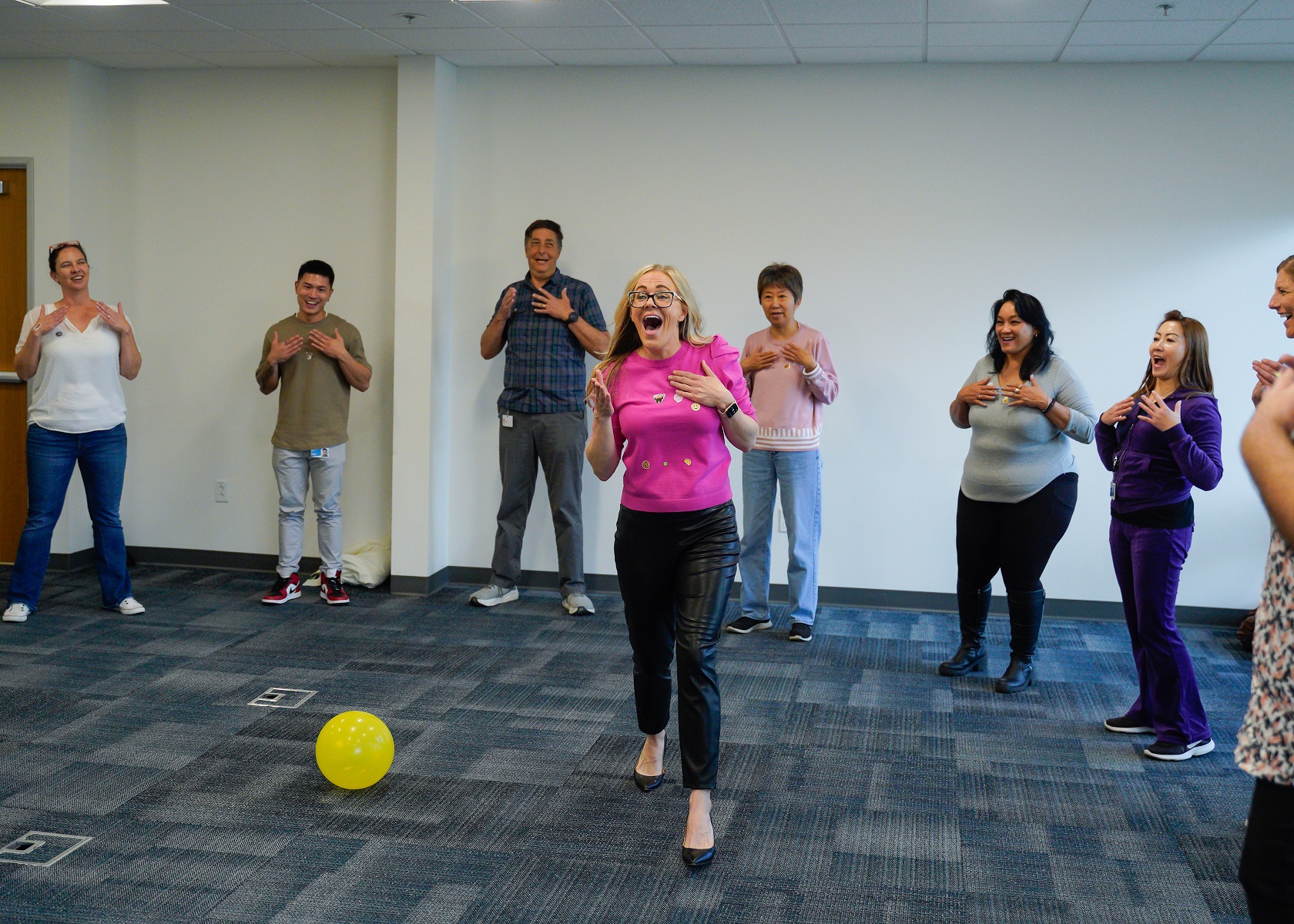 In Seattle, Jessica Brustad has been a certified Laughter Yoga Instructor since 2015. Before then, she’d been doing work in “the grownup corporate world” – and had the stress-related disorders to prove it. Even her off-hours hobby, doing comedy and improv on the side, was taking its toll.
“I knew laughter made me feel good,” she explains on her website, The Funny Yogi, “and yet sometimes in Comedy it was at my own expense. When you realize you can laugh for no reason and still get all the benefits with none of the down sides, it’s like a SUPER POWER!”
And in a recent interview, she expanded on that idea in a recent interview. “Laughter yoga has no cost – nobody is made fun of, we are all just making fun.”
For a long time, Brustad conducted regular Laughter Yoga sessions throughout the year – outdoors at a city park.
“People gave us strange looks as they ran by,” she says. But – in Seattle, at least – it’s hard to resist a bunch of folks who are cheerfully laughing despite rain or wind or snow. Or hail. Or fog. Over time, many more people took part.
The health benefits are tangible. Research shows that ten minutes of this type of laughter is equal to 30 minutes of cardio for your heart. In fact, Norman Cousins called laughing “internal jogging.” However, while this activity generates good cardiovascular benefits – it does not burn as many calories as jogging does!
When Brustad became pregnant, she paused her teaching – and then the COVID pandemic hit.
She took The Funny Yogi to YouTube and conducted online Laughter Yoga sessions, which had their own unique charm – people joined in from Panama, the Middle East, Germany, and Barbados to laugh away their stress. But when she tried to bring an in-person group back after the pandemic quieted down, people weren’t ready to be social again, and they were probably newly leery of an up-close, air-expelling activity like laughter.
So, Brustad made another switch, creating Laughing Yoga workshops for her old nemesis, the corporate world. This kind of programming has been especially helpful for companies like the tech giants that hire staff from around the globe.
“Laughter doesn’t have an accent, laughter crosses cultures,” Brustad says.
In fact, one of her workshops helped to smooth over ruffled feathers between two groups of engineers working for the same company. One contingent was from California, the other from Germany.
Brustad typically concludes each laughter exercise by having everyone in the group clap their hands in unison while chanting the affirmation: “Very good – very good – yay!”
The German engineers resisted this – asserting that they’d never say something like “very good” in this context – so Brustad asked what they might say instead. “Not that bad?” one engineer volunteered, and the rest in his group agreed.
This prompted a reaction of immediate relief from the American engineers, because up to that point in their working relationship with the Germans, the only feedback they’d been getting on projects they’d been working on jointly had been just those words – not that bad – which the Americans took as a negative response. Thanks to Laughter Yoga, the cultural divide had been crossed!
So for all of the subsequent Laughter exercises undertaken by this particular group, participants concluded with a new line: “Not that bad – not that bad – YAY!” Americans and Germans alike delivered the line with a newfound zeal.
Brustad likes to say that the moral of this story is: “You can get huge ah-hahs from the ha-hahs.”
Now that the COVID crisis is five years distant, she has been offering in-person Laughter Yoga sessions again. If you’re in the Seattle area, she’ll be offering a free Laughter Yoga group at the Haller Lake Community Club (North Seattle) on the first Saturday of every month. It will be held between 5-6 PM.
“Because…” Brustad says, “that’s Happy Hour, right?” And then she laughs.
Barbara Lloyd McMichael is a freelance writer living in the Pacific Northwest. Check out her new Pacific Rim Story Laboratory website.
Barbara McMichael
Barbara Lloyd McMichael is based in the Pacific Northwest and writes about books and culture. She writes a syndicated weekly book review column called “The Bookmonger” that focuses on Northwest books and authors. Her PR for People® Book Review is written exclusively for The Connector.